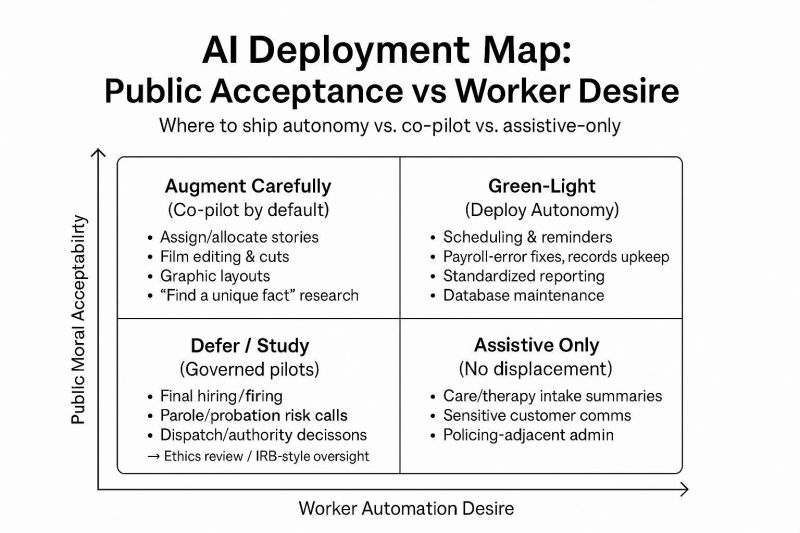
Public acceptance versus worker desire, on one map
2025-10-22
AI adoption is not just about technology. It's about understanding the delicate balance between public moral acceptance and worker desire.
This AI Deployment Map is a reminder of where to draw the line between autonomy, co-pilot assistance, and purely assistive functions.
Where do you see your team applying AI for the greatest impact?
The evidence behind the map. Three excerpts from Friis and Riley, reproduced for commentary with credit to the authors.
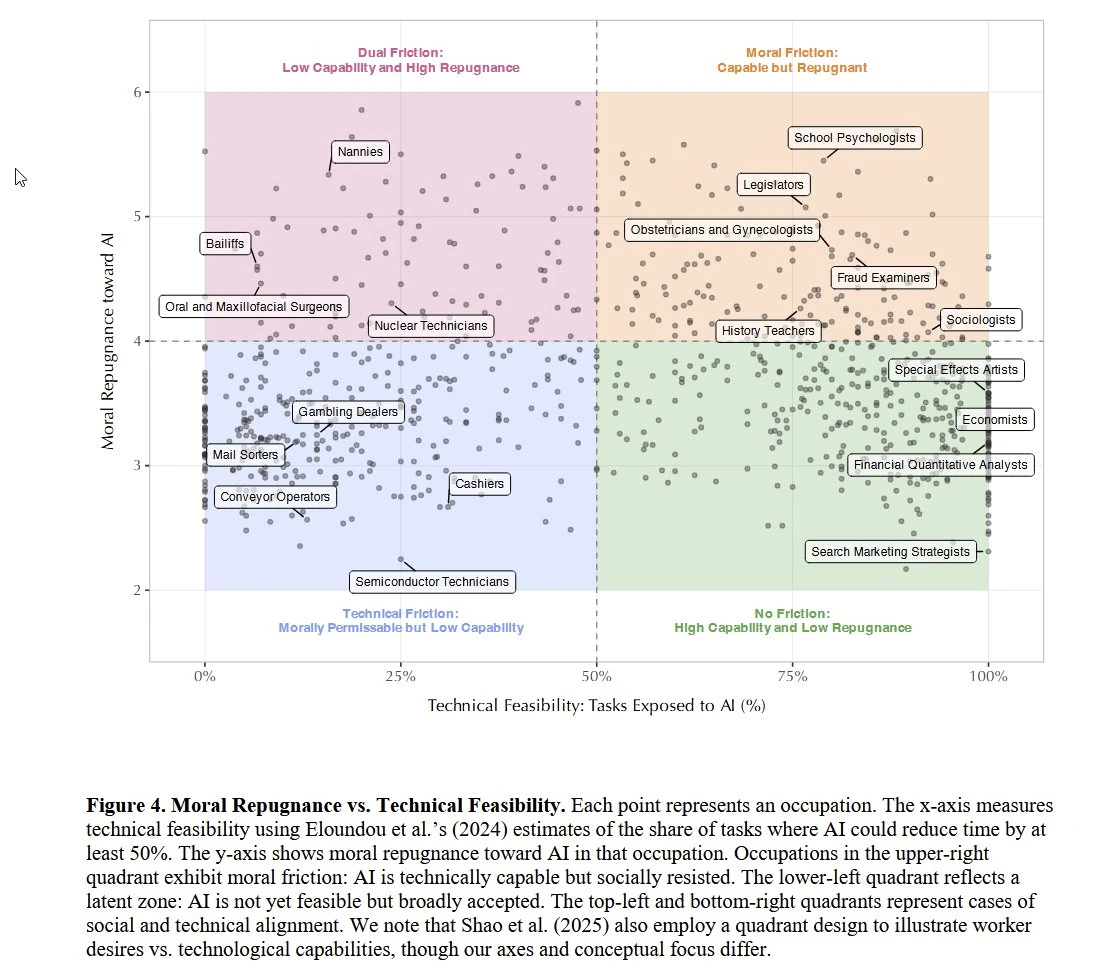
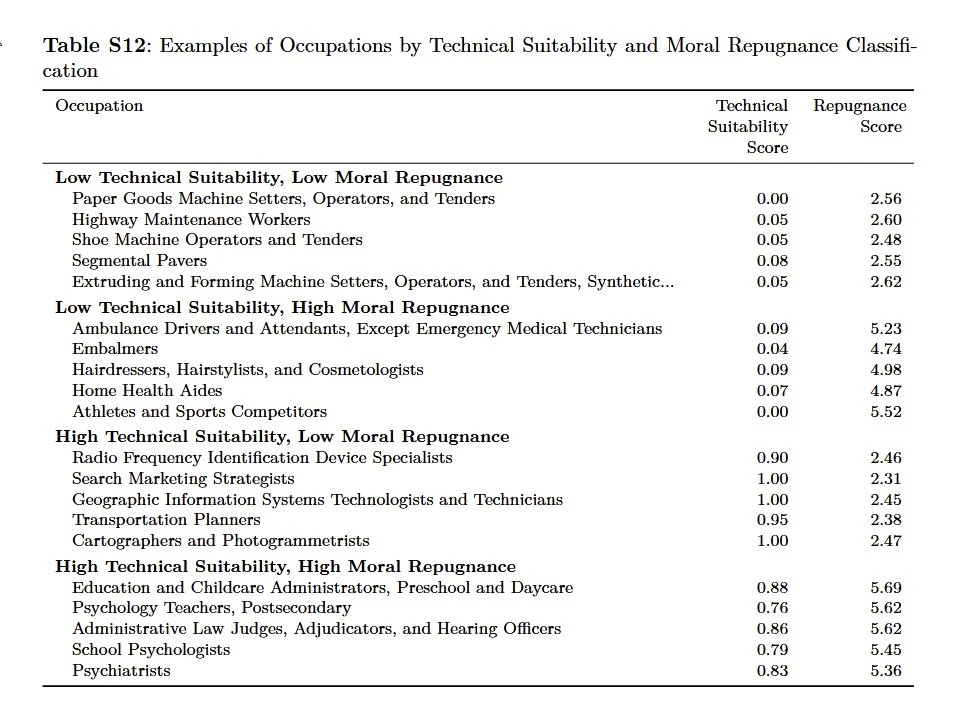
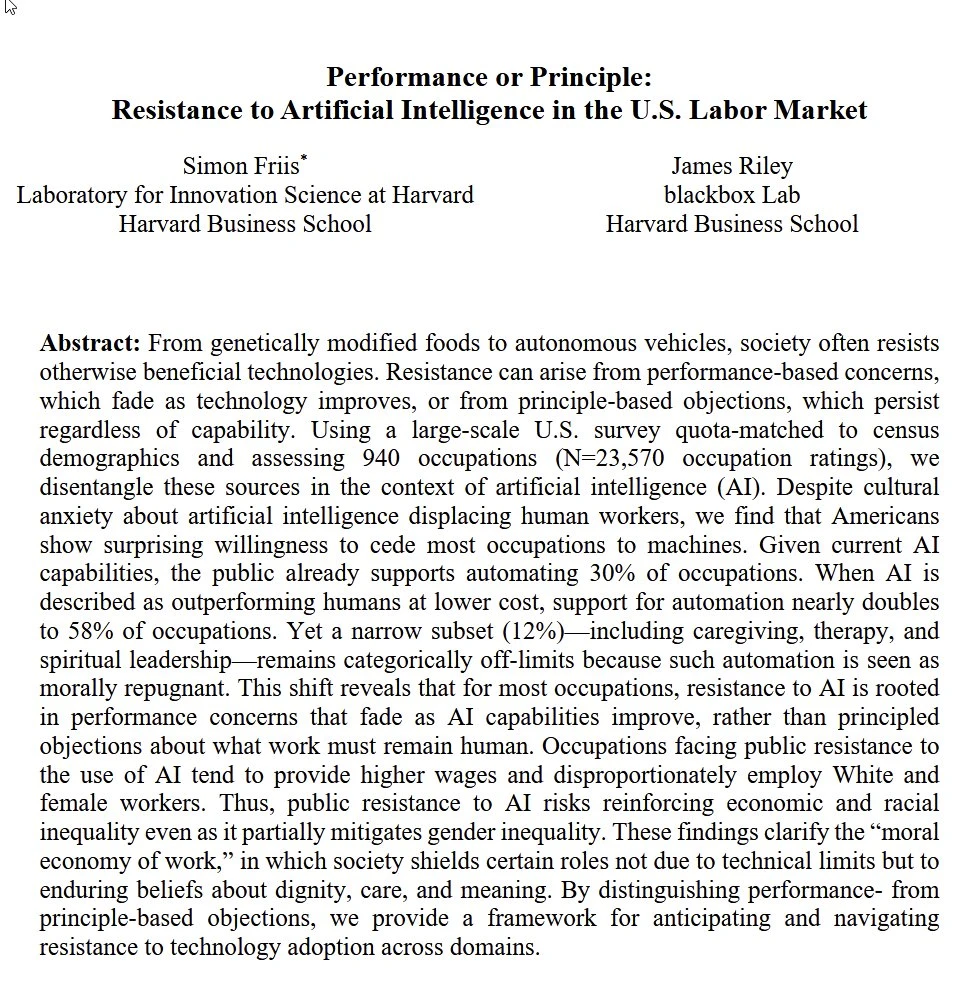
Sources. The map draws on the Stanford SALT Lab study Future of Work with AI Agents: Auditing Automation and Augmentation Potential across the U.S. Workforce (Shao, Zope, Jiang, Pei, and colleagues, 2025), its companion site futureofwork.saltlab.stanford.edu, the Harvard Business School working paper by Simon Friis and James Riley, Performance or Principle: Resistance to Artificial Intelligence in the U.S. Labor Market, whose figures appear below, and Ethan Mollick's thread that brought it to my feed.
First published on LinkedIn, 22 October 2025. Lightly revised. Original post.